Scott BreretonCustom games for restaurants

A game made for your restaurant brand.

Customers play it on their phones from a link or a QR code on your cups, bags and receipts, so your brand stays in front of them between visits. If you want to reward them, a good round can earn something at the store they pick, and each franchisee decides how many rewards their store gives out.

Your Brand Riverside

Rewards at this store today

14 of 20 given out

Daily limit
20
Weekly limit
100
Hours
2 pm to 9 pm
Rewards onPause today
What each franchisee sees
Tap Play to try it
Plays in any phone browser without a download Rewards are optional and capped by each store English, French and Spanish

What your game could be

Each game is designed for one brand, in whatever format suits it. The brands in these examples are made up.

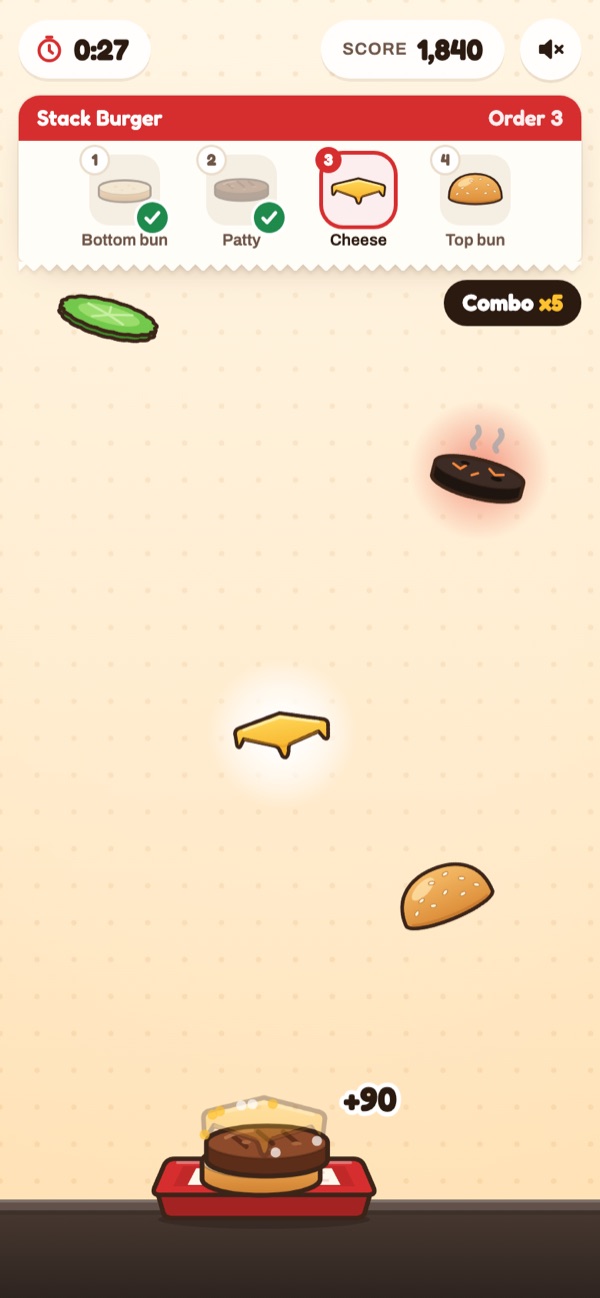
Catch the order, an arcade game branded Stack Burger Catch the order Playable Catch each ingredient in the order the ticket asks for, and dodge the burnt ones. Try it with twelve different menus.
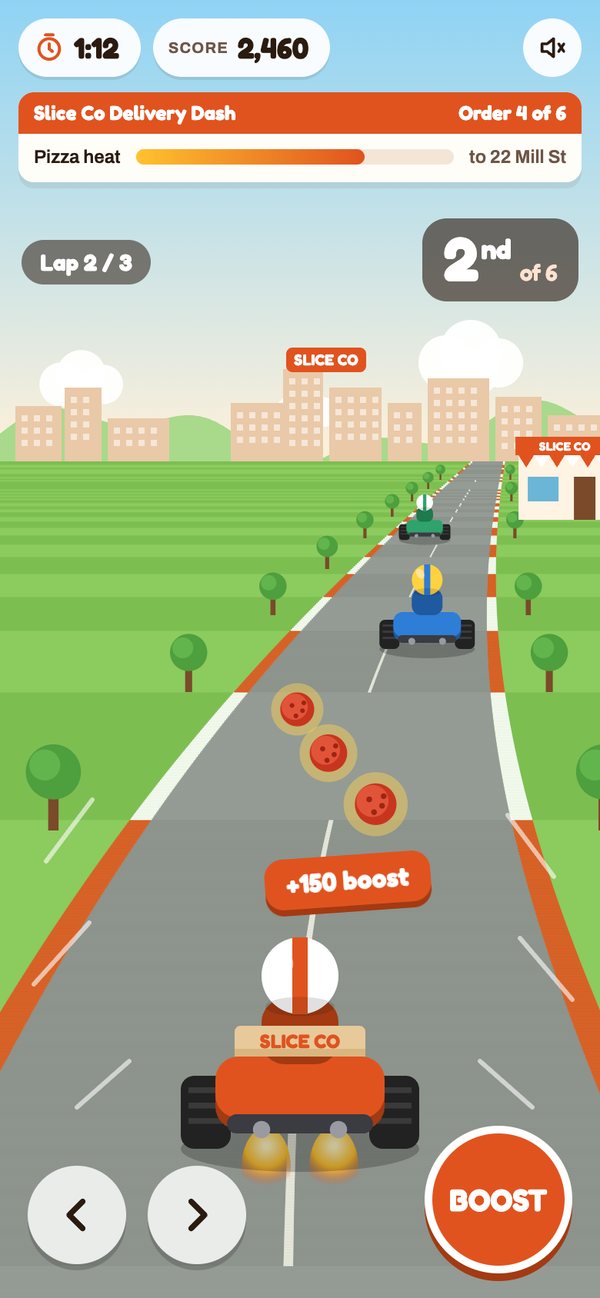
A kart race for a pizza brand called Slice Co, with delivery karts and pepperoni boosts Delivery race Concept Race delivery karts through town, grab toppings for a boost, and get the pizza to the door while it’s hot.
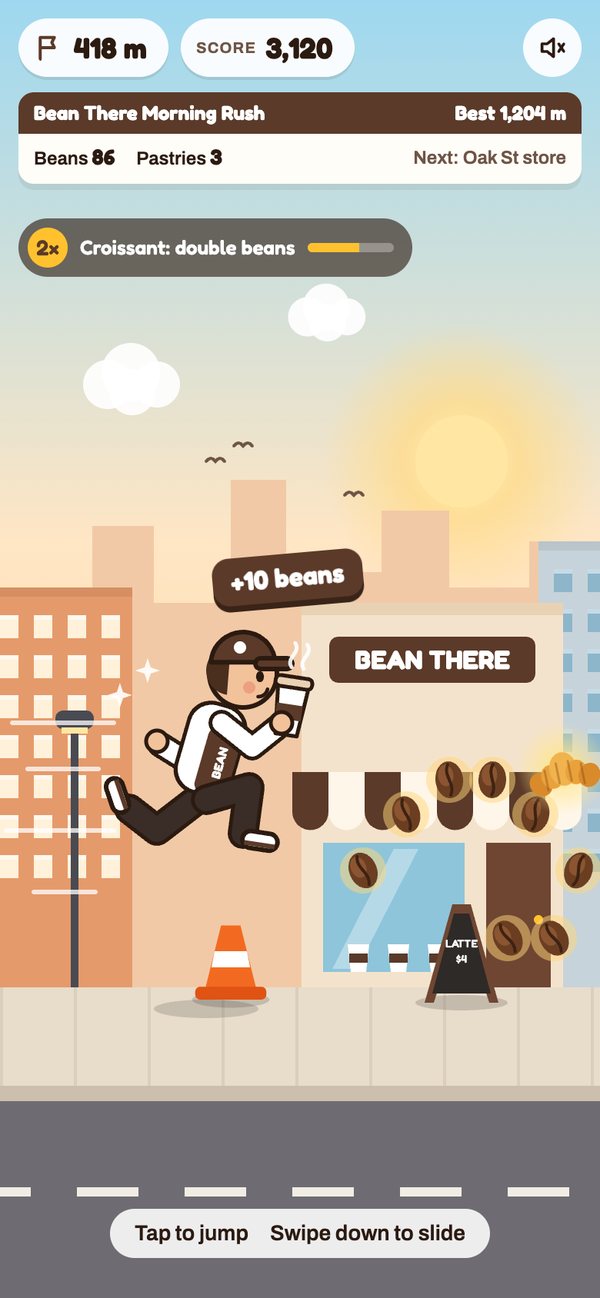
An endless runner for a coffee brand called Bean There, with a barista jumping a traffic cone Endless runner Concept Run the morning rush past your own stores, jump the cones and collect beans and pastries for as long as you last.
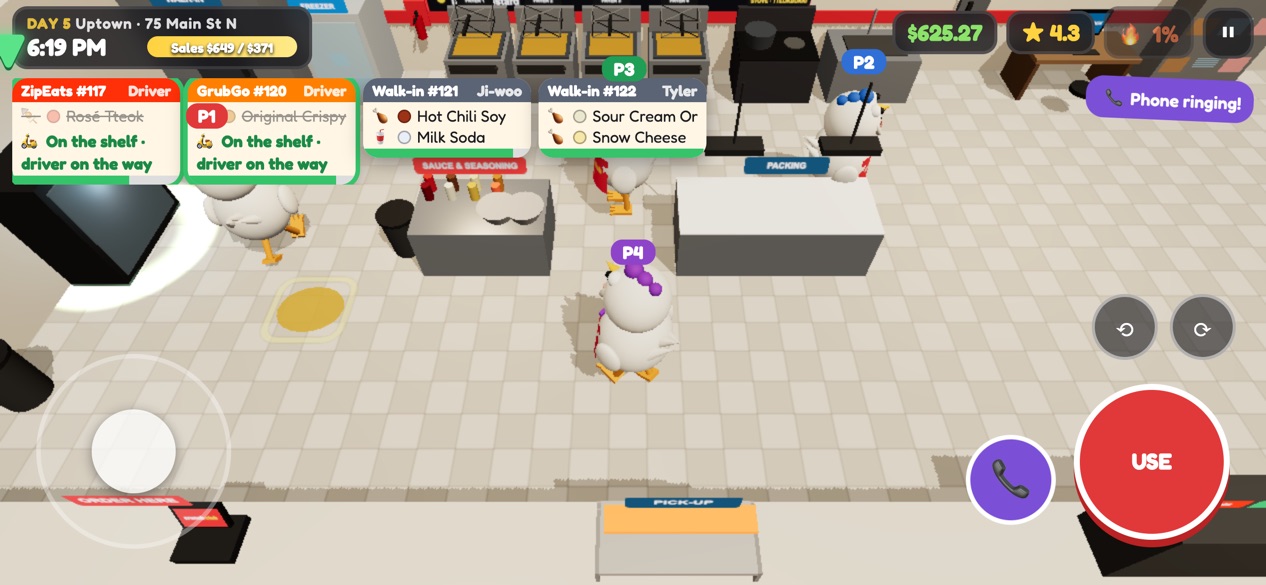
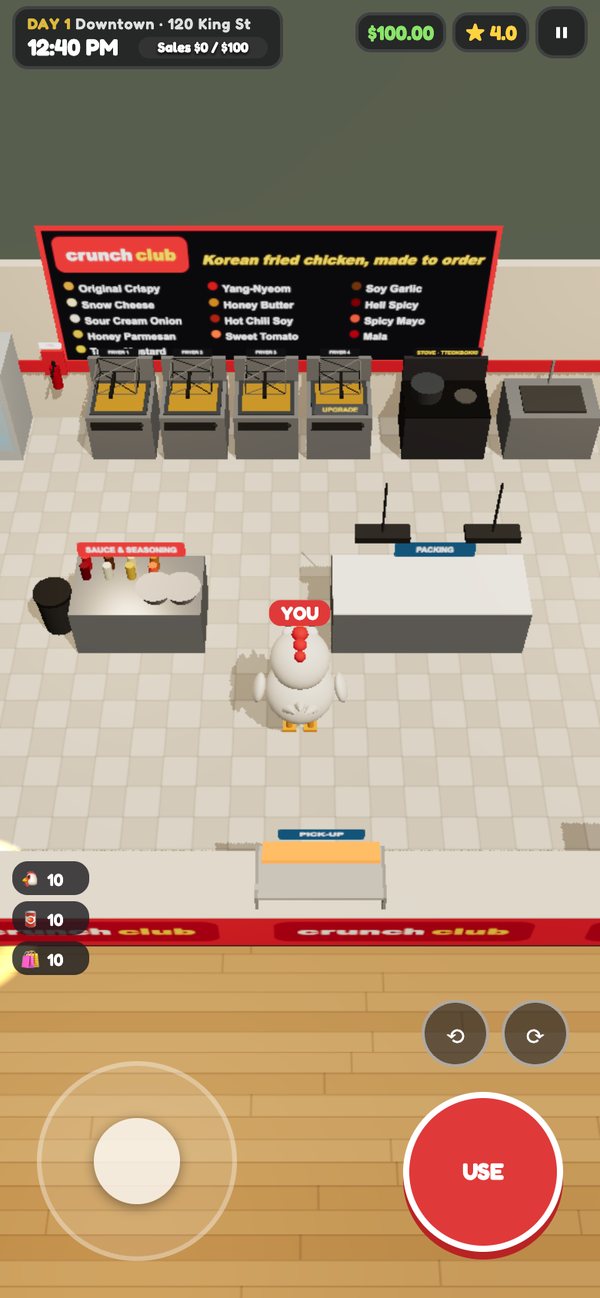
The custom 3D game: a player in a chicken suit working the kitchen of Crunch Club, a made-up fried chicken chain 3D restaurant Playable Run a whole store for a day, alone or with up to three friends online, with each location as a day of the week.

How customers find it

The game lives at a link and a QR code, so it goes wherever you already reach customers.

  • In your stores

    A QR code on cups, bags, receipts and table tents. Rewards can start the next day, so a coupon won in line is used on a later visit instead of on the order they're already buying.

  • Your own channels

    Social posts, your email list, your app and your website. A launch trailer gives you a video for the first posts.

  • Each franchisee's own link

    Every store gets its own link and QR code for local posts and community events, and the dashboard counts players for each one.

  • Something new to announce

    A seasonal level or a new reward is a reason to post again, and players who joined your email or SMS list hear about it first.

Rewards, if you want them

The game works without rewards. If you add them, head office sets the reward and the overall limits, and each franchisee controls their own store.

Free side campaign

Your Brand · November 1 to 30 · 25 stores

Each player
1 coupon a week
Each store, at most
20 coupons a day
All stores together
$625 a day at most
Coupon can be used
From the next day, for 7 days
RunningPause campaign
What head office sets (example)

Head office sets the campaign

You decide the reward and the most it can cost.

You choose what a player has to do, what they get and the limits per player and across every store. A free side that costs $1.25 to make, capped at 20 coupons a day in each of 25 stores, can't hand out more than $625 worth of food a day. Pausing stops new coupons straight away, and the ones already won stay good until they expire.
Stores in this campaign

Each franchisee sets their own

Downtown
20 a day
Riverside
15 a day, 2 pm to 9 pm
University
100 a week
Lakeshore
Not taking part
What head office sees (example)

Each franchisee runs their own store

Each store sets its own limit and hours, and can pause.

Franchisees pay for the free food at their counter, so each one gets a login for their store. They can set a lower limit by the day or the week, choose the hours coupons can be used so the lunch rush stays clear, pause for a day or stay out of the campaign altogether.

Limits count coupons handed out, so the most that can come back to a store is known before a single one is won. With 20 a day and a 7-day expiry, that's 140 in any week.

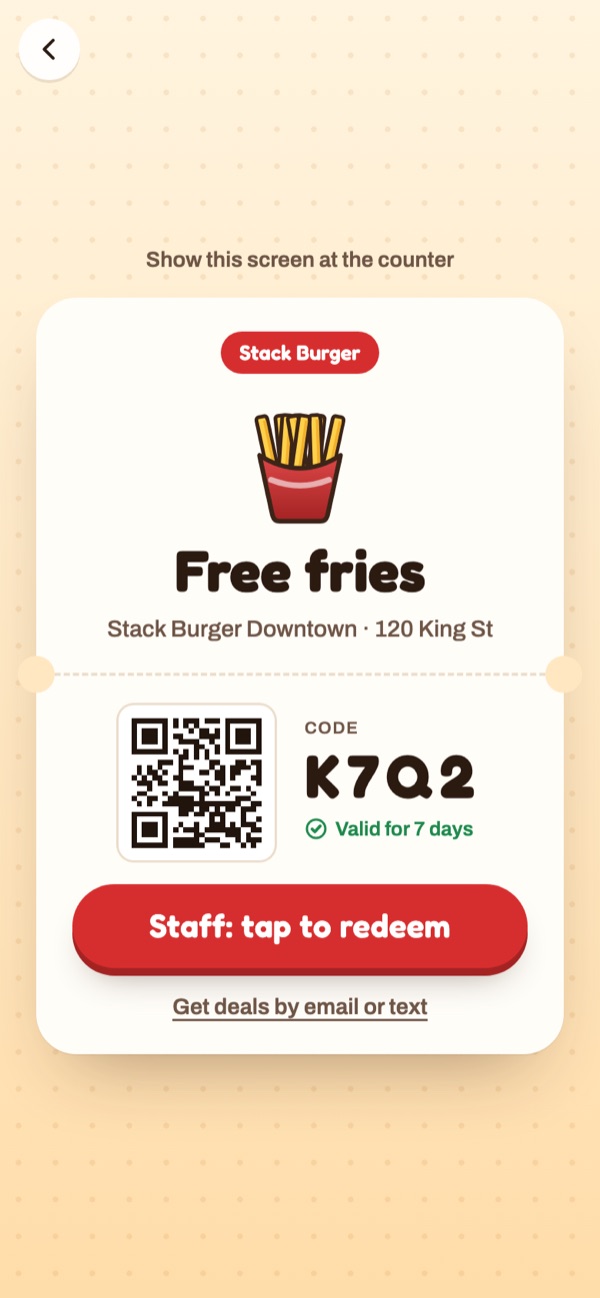
The coupon screen in the arcade example, with a Staff: tap to redeem button
The coupon in the arcade example

At the counter

Through your POS, or a simple check any staff member can do.

The game can connect to your POS, so the coupon rings in like any other. If you'd rather keep it separate, the player shows the coupon on their phone, and staff tap Redeem, type the store's four-digit code and ring in the discount, with no scanner or training needed. Either way the coupon can't be used again, and the dashboard records which store took it.

Want first dibs on new flavours?

Get deals and new menu drops from Your Brand by email or text.

Join the list

Opens the Your Brand sign-up page

No thanks, just my coupon

Example sign-up screen

A customer list you own, by store

The end of a round can offer a button to your own email or SMS sign-up page, and the coupon works whether they join or not. Your provider, such as Klaviyo, Mailchimp or Attentive, handles the consent and keeps the list.

The button passes along the player's store, so your sign-up form can tag each new subscriber by location.

Illustrative weekly report
StorePlaysCoupons earnedRedeemedSign-up clicks
Downtown1,24013841186
Riverside8609727122
University1,51514038231
Lakeshore430OutOut58

Numbers you can report

A dashboard shows plays, coupons earned, coupons redeemed and clicks to your sign-up page for each store, by week. Head office sees every store and each franchisee sees their own, so the same numbers go in front of franchisees and your marketing fund without anyone counting paper coupons.

Why customers keep playing

A game only keeps a brand in front of people if they open it more than once. These are the parts built to bring them back, shown in the 3D example.

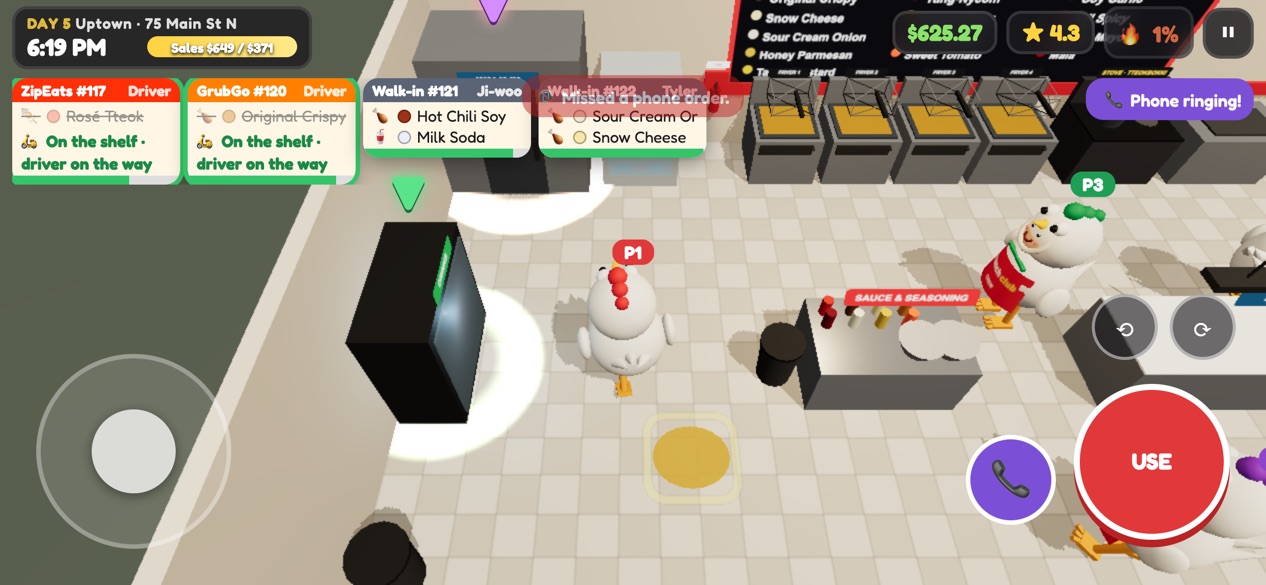
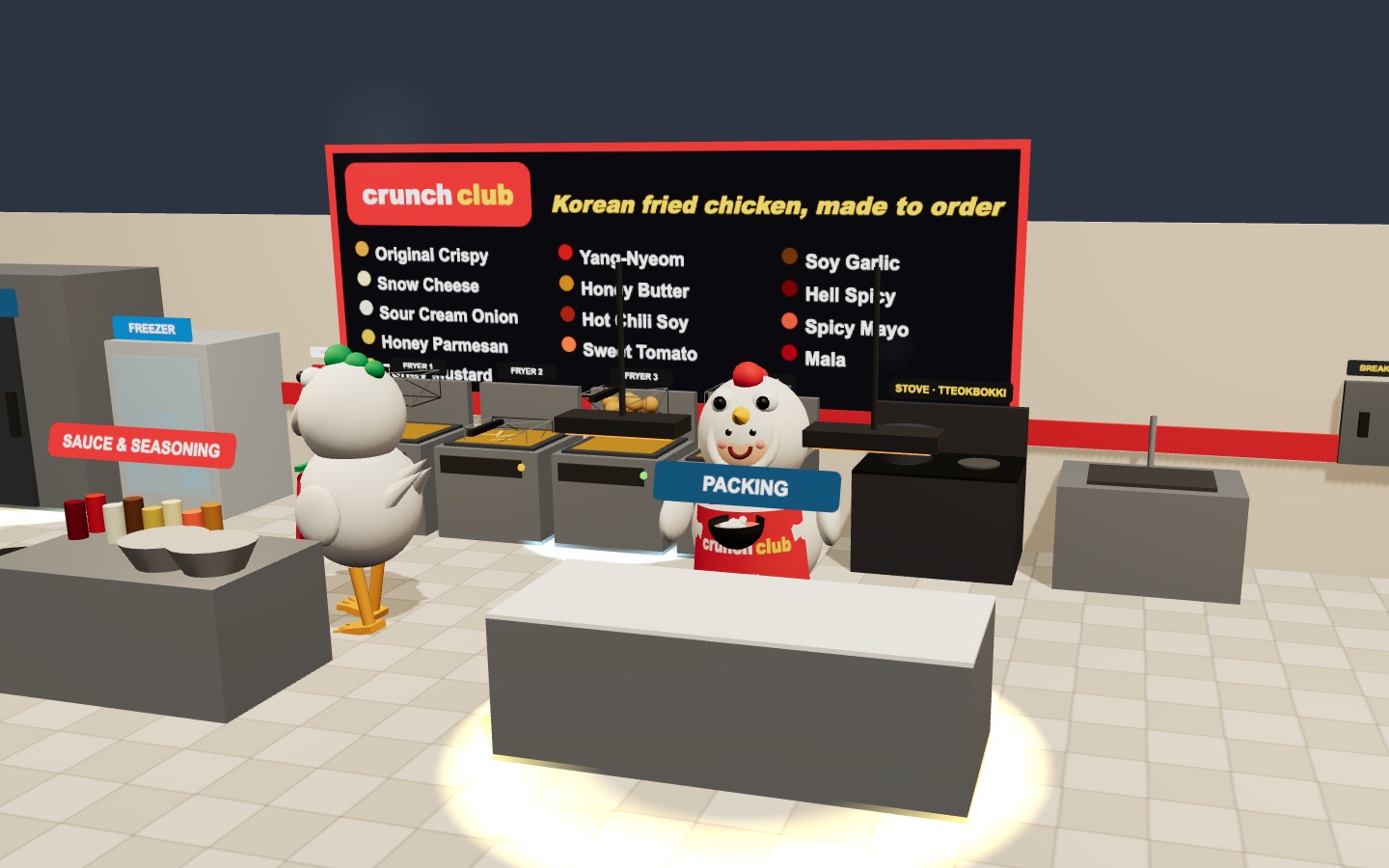
Players in chicken suits at the fryers under the menu board

They learn your menu by playing it

Everything in the game comes from your menu, so players learn the names by making them. In the 3D example, new flavours unlock over the first five days, and someone who plays for a week knows Yang-Nyeom from Hot Chili Soy before they reach the counter.

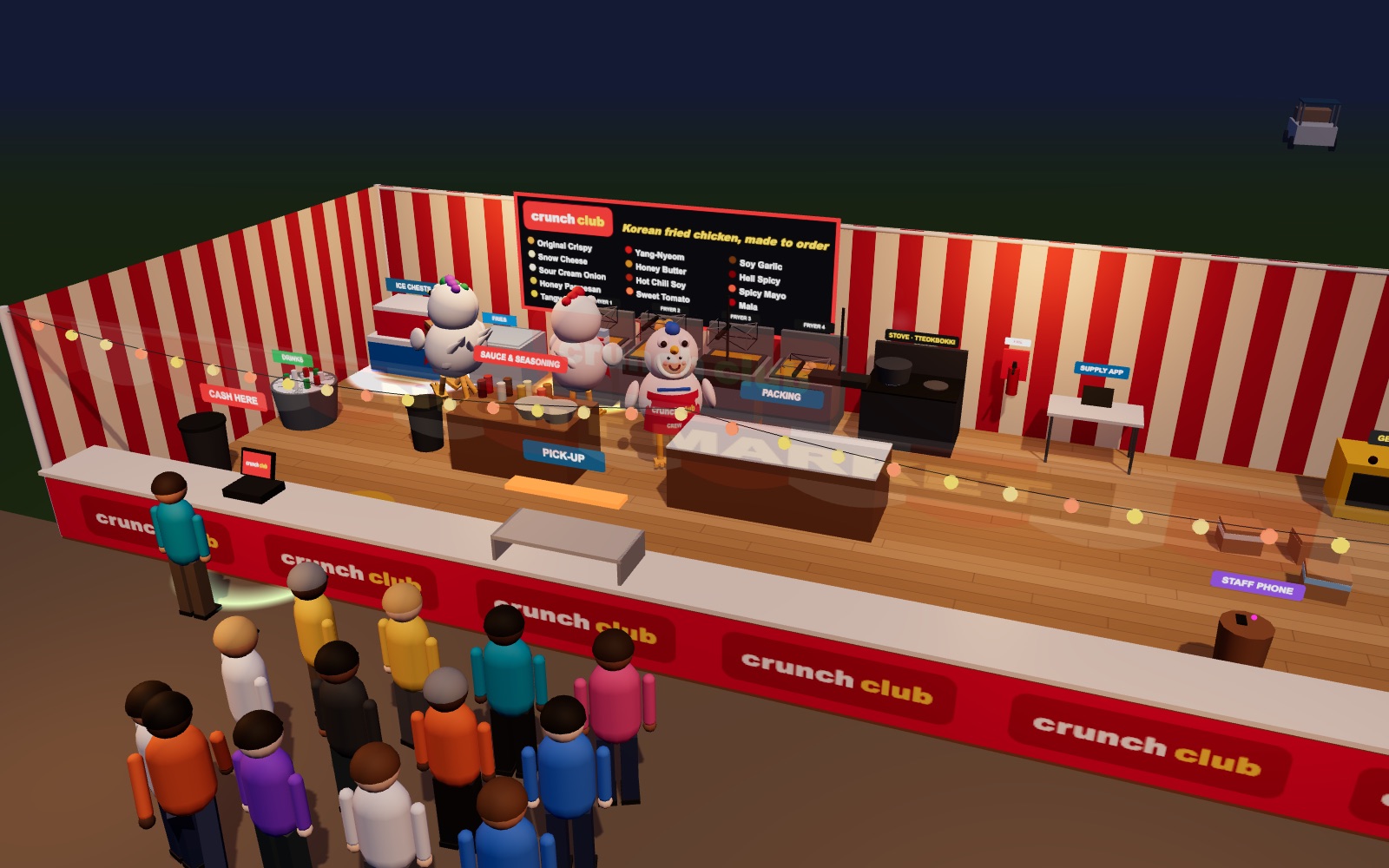
The Crunch Club stall at a night market in the game, with a crowd at the counter

Something new for every launch

A seasonal level turns a menu launch or an event into something to play, and gives you a reason to post about the game again. The 3D example has a night market, a summer music festival and Canada Day, each with its own stall and its own rush.

P1Player one's view of the shared kitchen
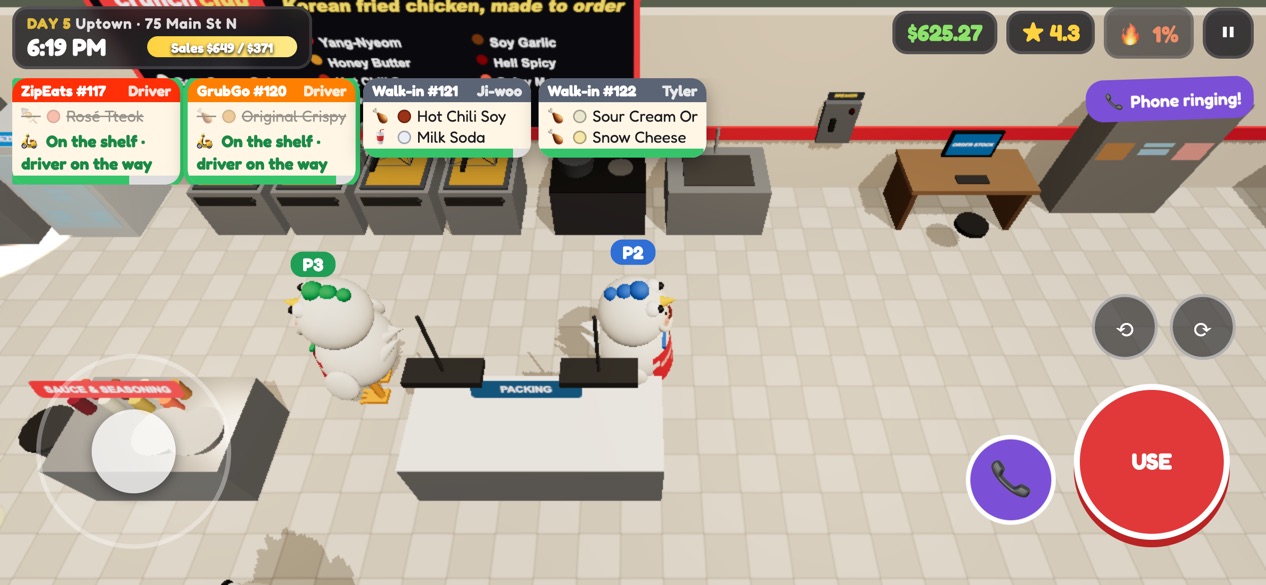
P2Player two's view of the shared kitchen
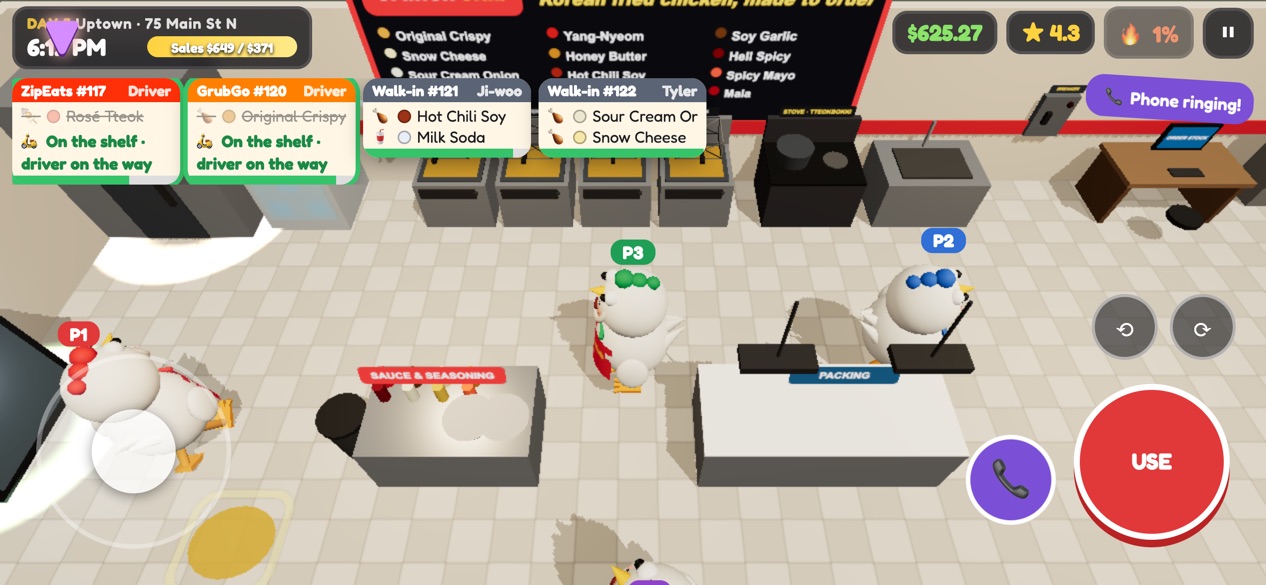
P3Player three's view of the shared kitchen
P4Player four's view of the shared kitchen

Friends play it together

In the 3D game, one person hosts a room and shares a four-letter code, and up to three friends join from their own phones wherever they are, so each new player hears about your brand from a friend.

What it can return

Illustrative cases for a 25-store brand with an arcade game and rewards, using a $12 average check, a free side that costs $1.25 to make and redemption rates from published restaurant promotions. The visit streak case adds a free entrée, costing $3.50 to make, for anyone who makes four paid visits in 30 days, including regulars who would have come anyway.

Each monthCautiousMiddleVisit streakStrong
Players per store100250250400
Coupons redeemed per store84141120
Extra visits per store, including return visits11623102
Free-food cost per store$9$51$79$150
Clicks to your sign-up page, all stores2509389382,500
Extra gross profit for the stores−$323+$1,171+$1,776+$15,960
Stores and fund together, after the $500 monthly fee−$823+$671+$1,276+$15,460
Pays back the $7,500 build inNo payback on these numbersAbout 11 monthsAbout 6 monthsUnder a month

What decides it

The number that matters is how many redemptions are visits that wouldn’t have happened anyway. In the middle case the free food pays for itself once that passes about 12%, and covers the monthly fee at about 20%. A in a few stores, with others held back for comparison, measures it before you roll out.

Who pays and who earns

Franchisees keep the extra sales and pay for the free food, which the caps hold to a known amount. The build and the monthly fee usually come from the brand fund, and since franchisees pay into it as a share of sales, the extra sales add to it as well. The last rows add the stores and the fund together, and the lets you put in your own numbers.

Start with a pilot

Measure it in a few stores before rolling it out to the rest.

Pick the stores

Run the game in five to ten stores for a month, and hold back a few similar stores for comparison.

Agree on success first

Before launch, we write down what counts: extra visits compared with the held-back stores, redemptions and sign-ups.

Decide from the numbers

At the end of the month you can roll it out, change the reward or stop, with the store-by-store numbers in front of you.

Pricing options

Two packages with a few extras.

PackageWhat’s in itUp frontMonthly
Arcade game Most brands start hereA quick game in your brand, played from a link or QR code, with optional rewards and visit streaks, store-by-store limits, a button to your email or SMS sign-up and the dashboard$7,500$500
Custom 3D gameYour own 3D game for up to four players online, with everything in the arcade game$25,000$500
ExtrasiOS and Android apps $6,000, each extra language $2,000, each seasonal level $3,000, a launch trailer $1,500
Get a price estimate The estimate and the ROI calculator, with your own numbers.

How it goes

You approve the plan before anything is built.

You email me

Tell me about your brand, your menu and what you want customers to do more of.

A one-page plan

I send you a plan for the game and the reward. Building waits until you approve it.

Playable builds

You get a link to the game as it comes together and can play it on your own phone.

Launch

The game goes live at a link and a QR code for every store, usually as a pilot first. If you added the apps, they go out under your store accounts.

You deal with me the whole way through. The person answering your email is the person building your game, and fixes after launch are part of the monthly fee. I also make See the Field, a free football strategy game on the App Store with a daily challenge, streaks and badges.

Tell me about your restaurant.

A few sentences about your brand and your locations is enough for me to tell you which option would fit and what it would cost. If a game won’t help, I’ll say so.